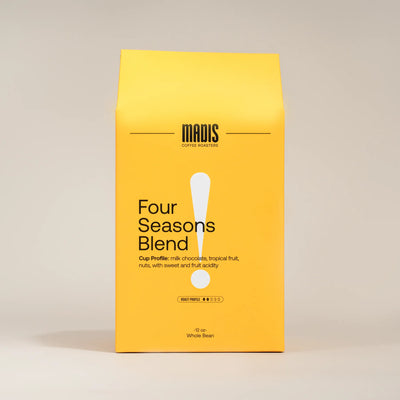

None of that is decoration. Every line on there is doing a job.
| What it says | What it tells you |
|---|---|
| Country and region | The broad flavour range to expect. Region is far more useful than country alone. |
| Farm or producer | Traceability. A named farm means somebody can be held to a standard. |
| Variety | The plant. A prediction of what the coffee can do, not a promise. |
| Process | Washed, natural, honey or anaerobic. Often the loudest single influence on the cup. |
| Elevation | How slowly it ripened, and therefore how dense the bean is. |
| Roast date | The most important date on the bag. Not a best before. |
| Tasting notes | What the roaster found. A guide to attention, not a list of ingredients. |
Why roast date matters more than an expiry date
Coffee does not spoil. It fades. So a best before date is really just telling you when the roaster stopped being willing to vouch for it, and that could be a year out.
A roast date tells you where in its life the coffee actually is right now, which is the thing you need to know. Coffee that is still releasing carbon dioxide brews unevenly and tastes sharp. Coffee that has been sitting for months tastes flat and papery. There is a window in between, and the roast date is the only thing that tells you where in that window you are standing.
We print a roast date on every bag we sell, so you never have to guess where in that window you are standing.
How to read tasting notes
Read these as a guide to what to pay attention to, not as a list of ingredients.
When a bag says blackcurrant and tomato, nothing has been added to the coffee. Those are compounds the roaster found in the cup, described using the nearest everyday thing to compare them to. Coffee is chemically complex enough that hundreds of its aromatic compounds overlap with the ones found in fruit and chocolate and flowers.
The way to actually use them is to read the notes first and then go looking for them, rather than sitting there waiting for blackcurrant to arrive. And it is worth knowing that notes are subjective and roaster specific. Two roasters can describe the same lot quite differently and neither one of them is wrong.
What the process tells you about brewing
This is where the label stops being information and becomes useful. A washed coffee is generally cleaner and more acidic and rewards a slightly finer grind and a pour over. A natural is heavier and fruitier and tends to shine in something like a French press. An anaerobic ferment is usually intense enough to be worth brewing on its own rather than as your everyday cup.
Try this
Take the bag you are drinking right now and read every single line on it before your next brew. Then make one change based on what you read. If it says natural, try it in a French press. If it says washed and high elevation, try a pour over with a slightly finer grind. Using the label to make a decision, instead of just reading it, is the entire reason it is printed there.